


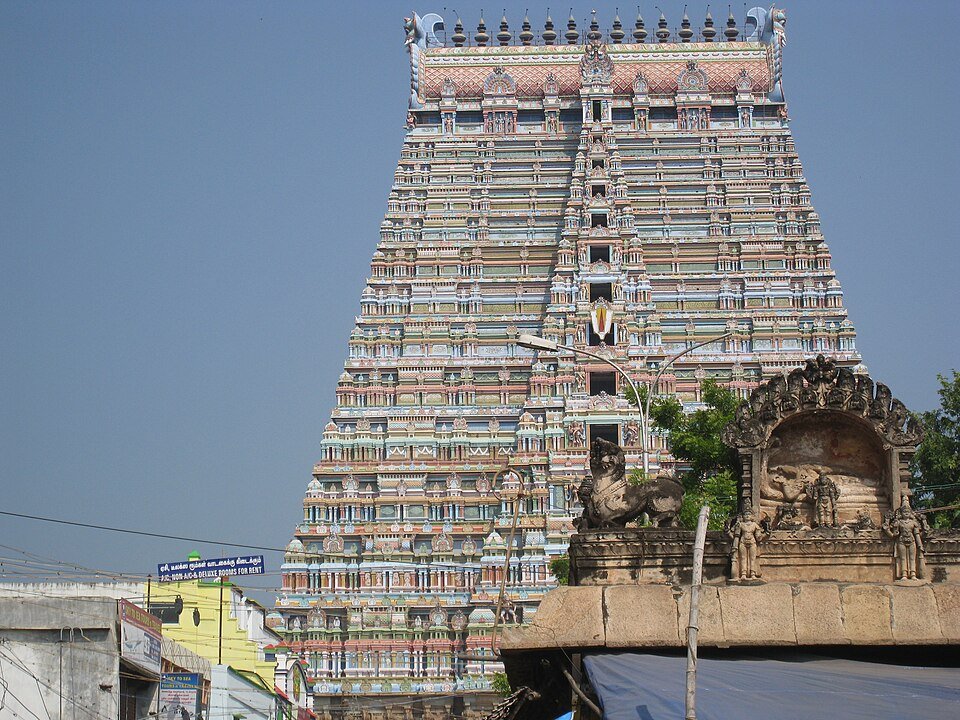
 SriRangam temple Raja gopuram - the main entrance gateway
Ever wondered what it’s like to walk through the biggest functioning temple town in the world? Let me take you there.
Srirangam is a riverine island nestled in the Cauvery, renowned as the sacred abode of the Sri Ranganatha Swamy Temple—one of the 108 Divya Desams dedicated to Lord Vishnu. (Divya Desams are 108 Vishnu temples a pilgrim is expected to visit in one’s life should one wish a place in Vishnu heaven – the Vaikunta).
If you're staying in Trichy, Srirangam is just 9 kilometres away. From Tanjore, it makes for a convenient day trip, located approximately 63 kilometres each way.
Srirangam Island is a naturally formed river island, cradled between the Cauvery and its distributary, the Kollidam. Spanning around 600 acres, it’s considered the largest functioning temple town in the world, with the Sri Ranganathaswamy Temple occupying a significant portion of the island. The island isn't just a religious destination—it’s a thriving settlement with bustling streets, traditional homes, and a rhythm of life closely tied to the temple’s rituals and calendar. Its layout, with concentric enclosures around the temple, reflects ancient town planning rooted in sacred geometry and symbolism. The economy of Srirangam Island revolves almost entirely around the Sri Ranganathaswamy Temple. As a major pilgrimage center, the temple sustains a lively local economy through tourism, religious services, and temple-related trades.
Priests, flower sellers, garland makers, bronze idol craftsmen, tailors stitching traditional attire, and shopkeepers selling everything from sacred ash to laminated calendar art—many livelihoods here are interwoven with temple life. Guesthouses, eateries serving prasadam-style meals, and guides offering myth-laced temple tours also thrive. During major festivals like Vaikunta Ekadasi, the island sees a surge in visitors, giving a temporary economic boost to even the smallest roadside vendor. In essence, Srirangam functions as a sacred micro-economy - where devotion doubles as commerce, and tradition fuels daily trade.
Pilgrims come to this island temple to seek blessings from Lord Ranganatha (a reclining form of Vishnu), immerse themselves in elaborate rituals, and marvel at the towering gopurams and intricately carved mandapams of classic Dravidian architecture. So, let’s slip into ‘Pilgrim Mode’ ourselves—and see what this divine maze of stone, stories, and sandalwood has in store!
If you're starting from the town of Trichy, you can afford a leisurely beginning to your day. However, if you're visiting from Tanjore on a day excursion, it's advisable to start early to make the most of your time. Regardless of where you begin your journey, the key is to reach the riverbank—specifically, a spot known as Amma Mandapam—by around 10:00 a.m., when the morning activity is at its vibrant peak.
A word of caution, especially for foreign visitors: Amma Mandapam is not just a riverside gathering point—it is also a sacred space where rituals are performed in memory of deceased ancestors. During these ceremonies, families are often in a reflective, philosophical state of mind, and it is customary for them to offer food or alms to those in need. As a result, a large number of visibly impoverished people and beggars tend to gather at the entrance.
For those unaccustomed to such sights, this can be visually overwhelming or even culturally unsettling at first. If you feel you may not be comfortable with this, it’s entirely understandable to opt out. However, if you're open to experiencing it through the lens of human anthropology, it offers a raw and moving glimpse into the cycles of life—grief, generosity, faith, and survival—all unfolding in a single moment.
As you step into the area near the riverbank, you’ll notice long sheds on either side, where countless priests sit cross-legged on the floor, offering their services for performing obsequies. Interestingly, the space is informally divided—one side is lined with Vishnu priests, while the other is occupied by Shiva priests, reflecting the twin devotional streams that flow through this sacred town.
You’ll encounter families here, grieving the loss of a loved one, with the male members often sporting shaven heads as a sign of mourning. They sit before the priest, with banana leaves spread out in front of them, adorned with offerings like rice, coconuts, and bananas. In ancient times, these offerings were part of a barter system, where the priests were given these items in exchange for their services, as well as offerings to the departed. This tradition continues to this day. As the priests chant Sanskrit or Tamil propitiations, the families invite their ancestors from the other realm to partake in the offerings and seek their blessings from the spiritual dimensions.
An eclectic array of vendors lines the space—selling dhotis, sarees, other fabrics, ghee, flowers, coconuts, and even offering salon services for head shavings. Adding to the scene, you’ll often find a blessing elephant stationed in front of a small Ganesh shrine. This curious mix of commerce and spirituality creates an atmosphere that feels both festive and somber at once. It’s a place where mourning and celebration seem to coexist, blurring the lines between the two in a way that’s uniquely Indian & uniquely Srirangam.
The Cauvery River, in the South, holds the same sacred reverence as the Ganges does for the people of the North. It is here, in the waters of the Cauvery that many families choose to disperse the ashes of their departed loved ones. However, unlike the Ganges, where the dead bodies are sometimes released into the river, and cremation Ghats are an integral part of the ritual in places like Varanasi, the tradition in the South is different. In South India, the dead are not cast into the river. Instead, there are dedicated crematoriums, often situated away from the
riverbanks, where cremations take place in a more isolated and private setting.
Timings: 6.00 am to 12.30 pm, 4.00 pm to 8.00 pm. 6.00 am to 10.00 pm (On function and ceremony days)
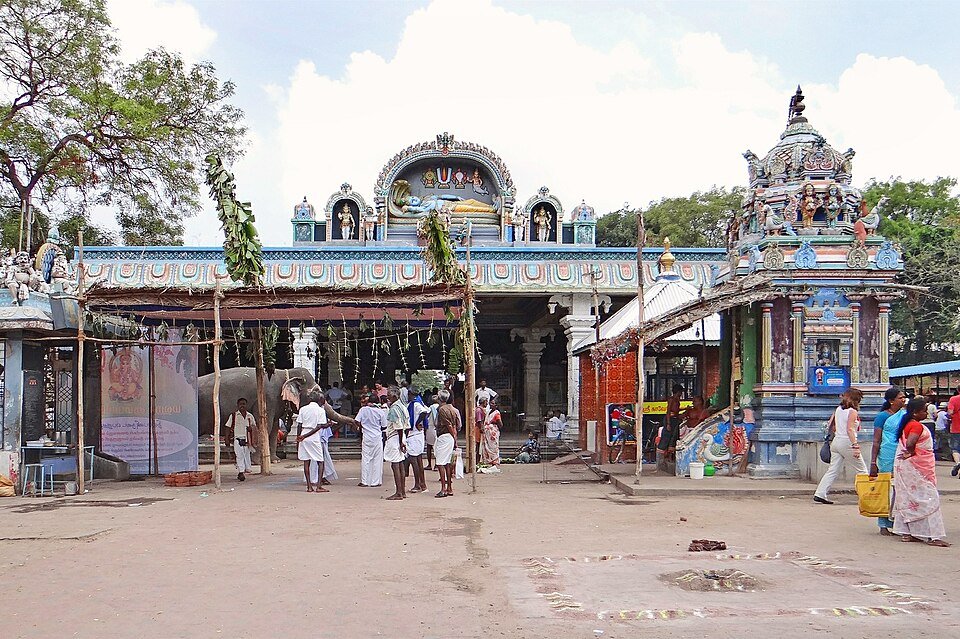 Amma mandapam Cauvery river ghat - Srirangam
After spending about half an hour by the riverbank, you might find it a good idea to take a break and use the comfort rooms, which are available in some of the nearby handicraft shops. These shops, in addition to offering restroom facilities, often display a range of interesting items for sale. While there's no obligation to buy anything, you can take a few minutes to browse through their offerings, perhaps finding a unique souvenir or simply appreciating the craftsmanship on display.
Afterward, you can hop into your vehicle for a short 10-minute drive to the temple entrance, where the spiritual journey truly begins.
Temple timings: Open from 6:00 AM to 12:30 PM & from 4:30 PM to 10:00 PM daily. Open from 6.00 am to 10.00 pm without breaks during functions/ceremonies.
PARKING: WHERE TO LEAVE YOUR VEHICLE
There are a couple of ways to explore this magnificent temple, but first, let’s take a moment to appreciate the layout of Srirangam. This is not merely a temple—it’s a bustling temple town. Beyond the majestic Raja gopuram, the main gateway, you'll traverse several concentric layers of roads, each lined with shops, houses, and restaurants, many of which are named after Tamil months or asterisms. As you journey inward, these roads lead you closer to the temple's sanctum.
However, once you reach the fourth gopuram, adorned with the phrase "Sri Ranga, Sri Ranga" (in Tamil) commercial activities cease, marking the transition into the sacred space. This is also where footwear is no longer permitted.
Now, you have two options: You can take a leisurely walk through the 400-meter stretch from the Raja gopuram, allowing you to immerse yourself in the sights and sounds of the bustling streets—or, if you prefer, you can drive through the maze of roads and head directly to the "Ranga, Ranga" gopuram, bypassing the lively buzz along the way.
While I strongly recommend experiencing the full vibrancy of the journey from the main entrance, the choice ultimately depends on your preference. Parking will depend on whether you decide to immerse yourself in the lively path leading to the temple or opt for a quicker, more direct route.
If you're driving yourself and want to explore the full journey, parking is available along one of the side streets near the main gopuram. However, if you choose the alternate route and want to get as close as possible to the temple, there are paid parking options nearby in case you’re unable to find a free spot on the roadside.
For those with drivers, it's business as usual—simply leave the logistics to them. Make sure to get their contact number beforehand, and once you're done exploring; give them a call to meet you at the designated spot. It's as simple as that.
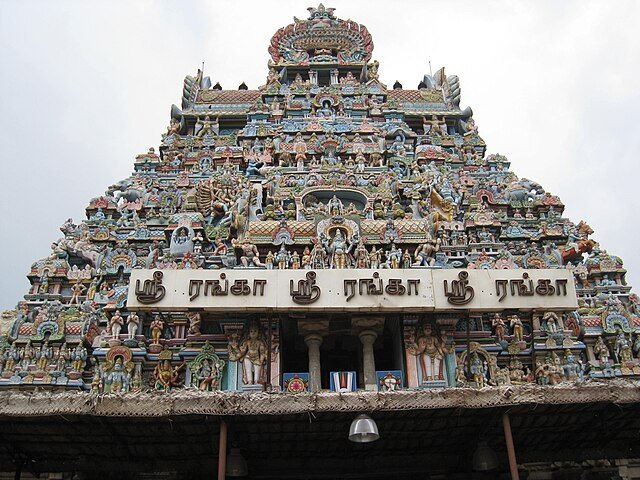 SriRangam temple Ranga Ranga gopuram
Time to part ways with your sandals—temporarily, of course! You can leave them at the organized footwear stand or hand them over to one of the nearby shops, where they'll babysit your shoes while you go soul-searching barefoot.
Dress code: Hopefully, you've read this blog before arriving at the temple—because yes, there is a strict dress code here. Long trousers are a must, and sleeveless tops are a definite no-no. But if that little detail slipped your mind, don’t panic! The temple town has you covered—literally. Fabric shops are everywhere, and you can easily pick up a dhoti or a wraparound for under ₹200. Consider it an impromptu crash course in temple-ready fashion!
Historically, the temple’s earliest inscriptions date back to the 10th century during the Chola dynasty, though the site likely existed in some form even earlier. It was patronized and expanded by successive dynasties—the Cholas, Pandyas, Hoysalas, Nayaks, and even the Vijayanagara kings—each leaving their architectural and cultural imprint.
The temple also faced challenges, most notably during the 14th century when Malik Kafur, a general of the Delhi Sultanate, raided South India. The idol of the main deity was spirited away to a place called Tirupati for safekeeping and returned only after decades. Despite such upheavals, Srirangam remained a vibrant spiritual center, especially for the Vaishnavite tradition. Today, Srirangam stands as the largest functioning Hindu temple complex in the world and is celebrated for its spiritual significance, architectural grandeur, and living legacy.
Architecture
The Sri Ranganatha Swamy Temple is a breath taking example of classical Dravidian architecture on a monumental scale. Sprawling over 150 acres, it’s the largest functioning Hindu temple in the world. The layout is based on ancient “Agamic” principles (sacred temple architecture treatise called the Agamas), unfolding in seven concentric rectangular enclosures called prakarams, each with its own walls, towers (gopurams), and gateways.
The most striking feature is the Rajagopuram—the main entrance tower—soaring to a height of 236 feet. Completed in 1987 after centuries of construction and planning, it's the tallest temple tower in Asia and a landmark that dominates the skyline of Srirangam.
Each outer prakaram (circumambulatory passage) is like a town in itself, with streets, markets, shrines, and mandapams (pillared halls). As you move inward, the energy becomes quieter and more sacred, culminating in the sanctum (Garbhagriha) that houses the reclining form of Lord Ranganatha on the serpent Adisesha.
Other architectural highlights include: The 1000-pillared hall (where coronation ceremonies of the past used to happen), a masterpiece of stone engineering, where every column is uniquely carved, The Sesha Mandapam, with sculptures so finely detailed they seem to come alive, The Venugopal Shrine, known for its beautifully carved ceiling panels and musical pillars & The Aryabhata Mandapam, where Ramanuja’s mortal remains are said to reside, preserved and seated in a meditative pose to name a few.
The temple is also known for its vibrant gopurams (21 in all), each painted in brilliant colours and adorned with elaborate sculptures depicting scenes from Hindu mythology—an ever-evolving gallery of sacred art.
Legend
The legend of this temple is intricately woven into the great Indian epic—the Ramayana. Now, if some of the names or events below sound unfamiliar, don’t worry! You don’t need to be an expert in ancient Indian epics to appreciate or understand the magic of this place. The temple stands strong in its own right.
That said, I strongly recommend that foreign visitors take a little time to explore the Ramayana—it’s a captivating tale of adventure, love, loyalty, and dharma (duty). There are plenty of excellent translations in English and many other languages. Trust me, it’s not a dry, dusty epic—it’s a page-turner featuring Lord Hanuman and his band of heroic warriors who leap across oceans, shape-shifting demons, divine weapons, and a golden kingdom. Definitely worth your time. No bore—I promise!
Anyway, according to legend, the statue of the presiding deity, Lord Ranganatha (a reclining form of Vishnu), was originally worshipped by Lord Brahma and later handed down through the solar dynasty, eventually reaching King Dasharatha of Ayodhya. After Lord Rama's return from Lanka, he gifted the idol to Vibhishana, Ravana’s brother. As Vibhishana was carrying the idol southward (originally intended for Sri Lanka), it is said to have magically rooted itself at Srirangam—deeming it too scared to move. Thus, the temple was built around it.
Vibhishana, now a deeply worried man, was moved to tears—he had failed to carry the sacred statue of Lord Vishnu to Sri Lanka as promised. But just then, a divine oracle was heard: Lord Vishnu chose to stay here. The idol rooted itself at Srirangam because this was where He wished to reside. The oracle offered comfort to Vibhishana, assuring him that from this very spot, Vishnu would keep Sri Lanka in His divine gaze. And so, in an unusual departure from the norm—where temple shrines traditionally face east—the sanctum of the Srirangam temple faces south, symbolically turned toward Vibhishana’s homeland as a mark of grace and eternal connection.
Note:
In the following sections, I offer a “Virtual Walkthrough of the Temple, in Words and Images” —a vivid, step-by-step walkthrough that reveals its many facets in words. If you prefer to experience the temple firsthand and let its beauty unfold naturally during your visit, you may wish to skip ahead. For your convenience, I’ve enclosed the virtual tour within red markers.
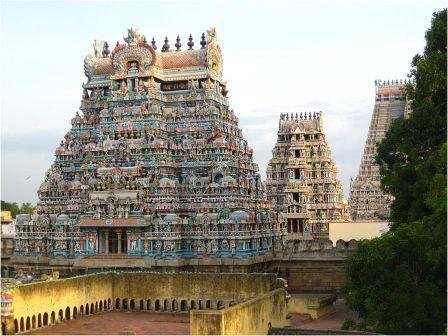 SriRangam temple rooftop view
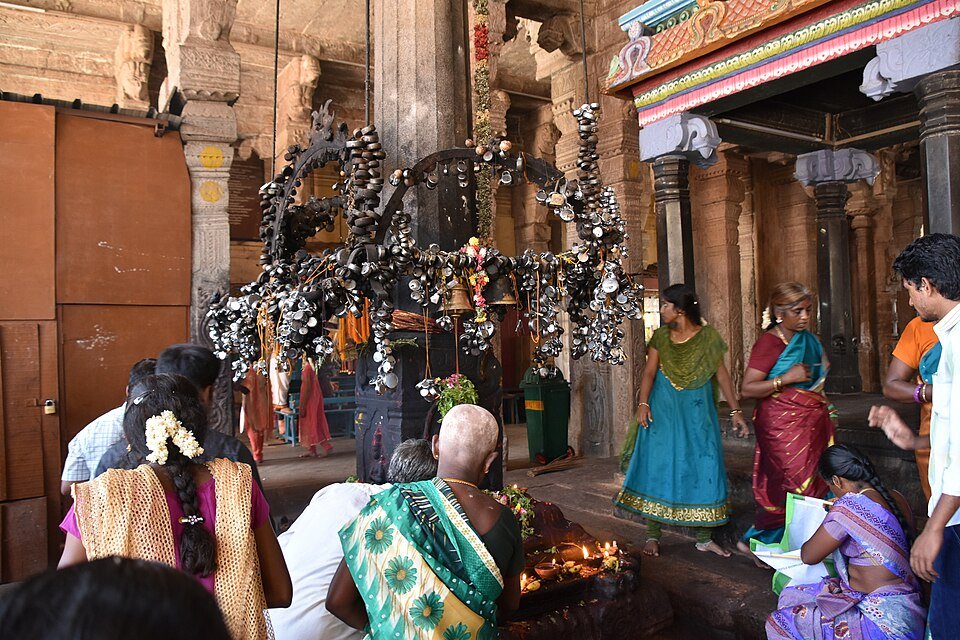 SriRangam temple where people lock evil spirits - forever
One more open prakaram—an expansive, open courtyard—between this mandapam and the next towering gopuram and as you pass through the gopuram, you’re entering the holiest and most sacred space of the temple—the path leading to the Ranganatha Swamy shrine.
If you’re a non-Hindu, it's important to note that entry to the main shrine, where Lord Ranganatha resides, is restricted.
For those who wish to experience the temple's sacred atmosphere without the long wait, there’s an option for a quicker darshan. The temple offers special entry tickets, which allow for a faster procession through the crowds. These tickets can be purchased inside the shrine, but note that they require an additional payment.
The cow shed & the granary
If you're not proceeding into the main shrine, take a detour by turning left—this path leads you to one of the temple’s lesser-known but truly fascinating corners: the cow shed and granary. Be warned: there are no signs here, so unless you're with a guide or know exactly where you're going, you might need to ask for directions.
First, you’ll come across a quiet shrine that houses one of the oldest surviving paintings of a reclining Vishnu—a hidden gem for art and history lovers. Just to the left of this shrine is the cow shed, once grandly designed to house 400 cows. Though the current bovine population is much smaller, the structure still speaks of an era when temple self-sufficiency was a full-scale operation.
To the right, you’ll find three massive 14th-century granary silos—towering relics of strategic planning. After the devastating attack on the temple by Malik Kafur and his forces, the temple authorities braced for the worst. They fortified the temple and stocked up, creating a system of total self-sufficiency. The plan? Sustain 3,000 people with three meals a day for three years, complete with their own vegetable gardens, coconut groves, dairy supply, and enough rice and pulses to last through a siege. It’s like ancient disaster preparedness—Dravidian style.
Don’t miss the giant footwear hanging just outside the Vishnu shrine—each one so enormous it looks like it could fit an entire family. These outsized sandals aren’t just a quirky photo op—they’re devotional offerings made by devotees.
The belief? That Lord Vishnu himself walks the temple premises at night, inspecting and blessing the sacred grounds. And since Vishnu in Sanskrit means “the one who pervades everything” or “as vast as the sky,” it follows that the divine footsteps would need appropriately large footwear. Big deity, big sandals! A delightful blend of reverence and imagination that brings a smile even in the most sacred spaces.
The heaven’s entrance
You now proceed on a circumambulatory path to reach the temple’s sacred back entrance, known as the Soorga Vasal, or “Gateway to Heaven.” This revered portal is opened to devotees only once a year, during the auspicious occasion of Vaikunta Ekadashi, which falls in December or January. It is believed that passing through this gateway during Vaikunta Ekadashi grants the devotee assured entry into Vaikunta, the eternal heavenly abode of Lord Vishnu.
If one is unable to pass through the Soorga Vasal, there exists an alternative near the shrine of Lord Narasimha. Here, five small holes are found in the ground. The devotee must bend down with knees kept straight, insert their fingers into these holes, lean to the left, and catch a glimpse of the Heaven’s Gate from a distance. According to belief, even performing this humble act ensures a place in Vaikunta, the celestial abode of Lord Vishnu. It is regarded as a quiet test of faith and devotion.
The other shrines
Scattered across the temple complex are several smaller shrines devoted to the many divine forms of Lord Vishnu, along with a sanctum honouring the esteemed philosopher-saint, Sri Ramanuja. A local guide will be well-equipped to lead you to these sacred spaces and share their significance, depending on the time you have to spare. For now, I shall leave their discovery to the quiet delight of your own exploration.
The temple tank
Just outside the shrine of Lord Narasimha, as you continue along the circumambulatory path, you’ll come upon the crescent-shaped Pushkarni—the temple’s sacred tank.
The shrine of Ramanuja
Continuing further, you’ll find the shrine of sage-philosopher Ramanuja. One of the most extraordinary aspects of Sri Ramanuja’s shrine is that it enshrines not a symbolic idol, but what is believed to be his actual mummified body, preserved for nearly 900 years. Ramanuja lived from 1071 to 1137 CE.
Seated in a meditative posture and adorned with sandalwood paste and sacred vestments, his form appears lifelike and serene. Devotees regard it not merely as a relic, but as the living presence of the acharya (spiritual guru) himself, still blessing those who come with devotion.
The 1000 pillared hall
The famed Thousand-Pillared Hall—though it actually contains 960 stone pillars, with the count ceremonially rounded off to a thousand using coconut palm stumps during festivals—is a grand space that once served as the venue for royal functions and coronation ceremonies in ancient times. Rich in architectural splendour and historic significance, it now plays a vibrant cultural role in temple festivities. In the lead-up to Vaikunta Ekadashi, the hall comes alive with classical music concerts held for ten days prior to the festival and continuing for ten nights afterward, transforming it into a space where devotion, heritage, and art converge.
The white gopuram
Just before you reach the Sesha Mandapam, take a moment to look up—among the 21 towering gopurams of this grand temple, you’ll notice that one stands out, painted entirely in white. This is no artistic choice, but a solemn tribute to an extraordinary act of courage and sacrifice. During a period of Muslim siege, a temple maid, using her grace and presence, captivated a general through her dance. Leading him to the top of this very gopuram, she pushed him off—and then, in a final act of defiance and devotion, leapt to her own death. As a mark of respect for her valour and as a gesture of eternal mourning, this gopuram remains white to this day, while the others blaze with vibrant colour.
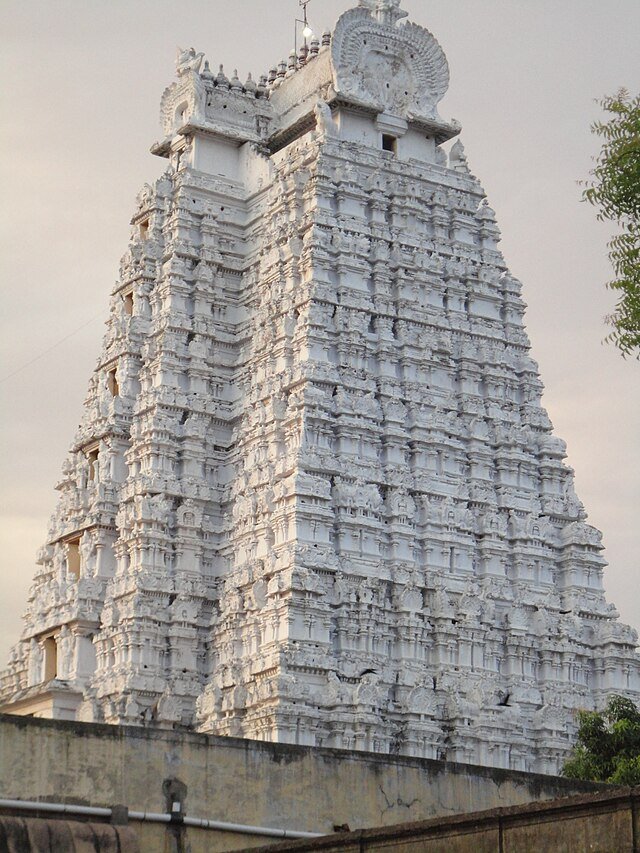 White gopuram Srirangam temple
As you continue along the circumambulatory path to your right, you'll encounter the Horse Mandapam (also known as the Sesha Mandapam). Adorning the pillars here are intricate depictions of Vishnu's ten avatars, but the true highlight is the sculptural scene of lively, prancing horses, with Indian rulers atop them and Portuguese soldiers serving below. This imagery harks back to a fascinating historical moment: when European sea routes were established, the lucrative spice trade diminished, and Arab traders lost their influence. Seizing this opportunity, the Portuguese began importing Arabian horses to India. The Vijaya Nagar Empire, keen on strengthening its position, granted the Portuguese a monopoly on the spice trade, with the stipulation that all horses were sold exclusively to the Vijaya Nagar rulers, bypassing the Muslim rulers in the North. This strategic alliance not only fortified the empire's military but also inspired confidence in its own soldiers, as reflected in the vivid carvings of spirited horses in the mandapam.
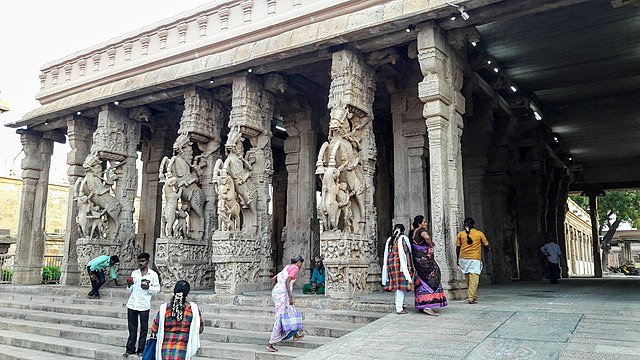 Srirangam horse mandapam Photo by Jagavarad from Wikimedia Commons licensed under CC BY-SA 4.0
Photo angles & perspective
• Amma mandapam river bank stop
• Rooftop perspective offering an aerial view of the whole temple complex including the golden dome of the temple’s sanctum
• Place where locks are locked and keys thrown away
• The granary and the cow shed
• The temple tank
• The heaven’s entrance door
• The 1000 pillared hall
• The white gopuram
• The Sesha Mandapam – particularly the 10 Avatars of Vishnu and the prancing horses
Drone Photography: If you have access to a drone and the necessary permissions, aerial shots can provide a unique perspective of the temple complex. Ensure compliance with local regulations regarding drone usage.
EXPLORING THE SURROUNDINGS: AROUND THE TEMPLE COMPLEX
Once you've had your fill of the temple's spiritual energy and architectural brilliance, if you have a bit more time—the area around the temple offers its own unique charm. The streets radiating from the temple are a bustling mix of the sacred and the everyday, forming a living extension of the temple experience where you'll find:
Vibrant Street markets, traditional eateries and sweet shops, handicraft stores and textile shops—perfect for picking up a handloom saree, temple jewellery, or even a souvenir dhoti if you forgot your dress code! & Spiritual book stalls, where shelves overflow with copies of the Ramayana, Bhagavad Gita, and works of Tamil Alwars and Acharyas (Gurus).